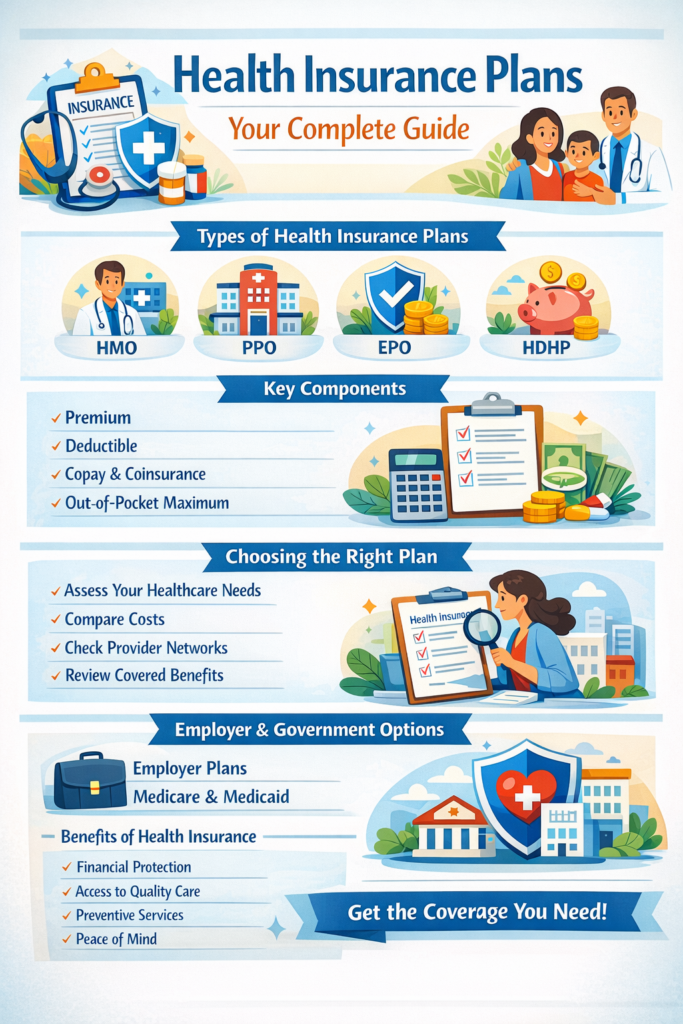
Health insurance plans play a vital role in protecting you and your family from unexpected medical expenses. With rising healthcare costs worldwide, having the right coverage is no longer optional—it’s essential. Whether you are self-employed, working for a company, or looking for family health coverage, understanding your options can help you choose a plan that fits both your health needs and your budget.
In this comprehensive guide, we’ll break down the different types of health insurance plans, key features to compare, costs involved, and practical tips for selecting the best policy.
What Are Health Insurance Plans?
Health insurance plans are contracts between you and an insurance provider. In exchange for a monthly premium, the insurer helps cover medical expenses such as:
- Doctor visits
- Hospital stays
- Prescription medications
- Preventive care services
- Emergency treatment
- Maternity and newborn care
- Mental health services
Depending on the plan, coverage levels and out-of-pocket costs vary.
Why Health Insurance Is Important
Medical emergencies can happen anytime. Without insurance, even a short hospital stay can result in significant financial stress. A good health insurance plan provides:
- Financial protection against high medical bills
- Access to quality healthcare services
- Preventive care benefits to detect illnesses early
- Peace of mind for you and your family
For example, in the United States, government-regulated plans under the Affordable Care Act ensure essential health benefits are included in most policies.
You can learn more about official healthcare regulations at the HealthCare.gov website.
Types of Health Insurance Plans
Understanding different types of health insurance plans helps you make a better choice. Here are the most common options:
1. Health Maintenance Organization (HMO)
HMO plans require you to choose a primary care physician (PCP) and get referrals for specialists.
Key Features:
- Lower premiums
- Limited provider network
- Referral required for specialists
Best for: Individuals who want lower monthly costs and don’t mind limited provider options.
2. Preferred Provider Organization (PPO)
PPO plans offer more flexibility in choosing healthcare providers.
Key Features:
- No referral needed for specialists
- Wider provider network
- Higher premiums compared to HMOs
Best for: People who want flexibility and are willing to pay more for it.
3. Exclusive Provider Organization (EPO)
EPO plans combine elements of HMOs and PPOs.
Key Features:
- No referrals required
- Must use in-network providers
- Moderate premium costs
4. Point of Service (POS)
POS plans require referrals but allow some out-of-network coverage at higher costs.
5. High-Deductible Health Plans (HDHP)
HDHPs come with lower premiums but higher deductibles. They are often paired with Health Savings Accounts (HSAs).
Key Benefits:
- Lower monthly payments
- Tax advantages through HSAs
- Suitable for healthy individuals with fewer medical needs
Key Components of Health Insurance Plans
When comparing health insurance policies, focus on these important elements:
Premium
The amount you pay monthly to keep your coverage active.
Deductible
The amount you must pay out-of-pocket before your insurance starts covering costs.
Copayment (Copay)
A fixed fee you pay for services like doctor visits or prescriptions.
Coinsurance
The percentage of costs you share after meeting your deductible.
Out-of-Pocket Maximum
The maximum amount you’ll pay in a year. After this limit, the insurance covers 100% of eligible expenses.
Individual vs. Family Health Insurance Plans
Individual Health Insurance
Covers one person and is ideal for:
- Freelancers
- Students
- Self-employed individuals
Family Health Insurance
Covers multiple family members under one policy.
Advantages:
- More cost-effective than separate plans
- Shared deductible in many cases
- Simplified management
Employer-Sponsored Health Insurance
Many companies offer group health insurance benefits to employees. These plans typically:
- Have lower premiums due to employer contributions
- Offer better coverage options
- Include additional wellness benefits
Employer-sponsored health plans remain one of the most affordable coverage options in many countries.
Government-Sponsored Health Insurance Programs
Government programs support low-income families, seniors, and individuals with disabilities.
In the United States, examples include:
- Medicaid – For low-income individuals and families
- Medicare – For people aged 65+ or with certain disabilities
These programs provide essential healthcare services at reduced or no cost.
How to Choose the Best Health Insurance Plan
Choosing the right health insurance plan requires careful evaluation.
1. Assess Your Healthcare Needs
Ask yourself:
- How often do you visit the doctor?
- Do you take regular medications?
- Do you have any chronic conditions?
- Are you planning for maternity coverage?
2. Compare Costs Carefully
Don’t just look at premiums. Consider:
- Deductibles
- Copays
- Out-of-pocket maximums
- Prescription coverage
A low premium plan may have high deductibles.
3. Check the Provider Network
Ensure your preferred doctors and hospitals are included in the plan’s network.
4. Review Covered Benefits
Look for coverage in:
- Preventive care
- Specialist visits
- Emergency services
- Mental health support
- Maternity and newborn care
5. Read Customer Reviews
Check customer feedback and claim settlement ratios before selecting an insurance company.
Common Mistakes to Avoid
When buying health insurance, avoid these errors:
- Choosing solely based on low premium
- Ignoring policy exclusions
- Not understanding waiting periods
- Skipping preventive care coverage
- Failing to compare multiple plans
Benefits of Having Comprehensive Health Coverage
A comprehensive health insurance plan provides:
- Financial stability
- Access to top hospitals
- Regular health checkups
- Coverage for major surgeries
- Protection from medical inflation
Health coverage isn’t just about emergencies—it supports preventive healthcare and long-term well-being.
Internal & External Resources
For further reading, explore:
- Our guide on How to Lower Your Medical Bills (internal link)
- Our article on Life Insurance vs Health Insurance Differences (internal link)
- Official marketplace information at HealthCare.gov (external link)
The Future of Health Insurance Plans
The health insurance industry is evolving rapidly with:
- Telemedicine integration
- Digital claim processing
- AI-based underwriting
- Personalized healthcare plans
Consumers now expect faster service, transparent pricing, and flexible coverage options.
Conclusion: Protect Your Health and Finances
Choosing the right health insurance plan is one of the most important financial decisions you can make. With so many options available—HMOs, PPOs, HDHPs, government programs, and employer-sponsored plans—it’s essential to evaluate your healthcare needs and compare costs carefully.
A well-chosen policy provides not only financial protection but also peace of mind. By understanding plan types, costs, benefits, and coverage options, you can confidently select a health insurance plan that safeguards your future.
Invest in your health today—because a strong insurance plan is the foundation of long-term financial security and well-being.